
Google Images just turned 25, and Google marked the occasion by shipping two real product changes rather than just a nostalgia post. If you run a website that depends on image search for any traffic, both are worth a few minutes of your attention.
What’s Actually New
To celebrate Google Images’ 25th anniversary, Google announced two new AI-powered features in July 2026 that could gradually change how users discover and interact with images.
The first change is a redesigned, browseable home for Google Images. Instead of a search-only entry point, it’s now a dynamic gallery of images pulled from across the web, tailored to your interests, with a “collections” feature that lets you save and revisit images in tabs above the main gallery. It’s rolling out over the next few weeks on desktop, U.S. English only, and requires being signed into a Google Account to use.
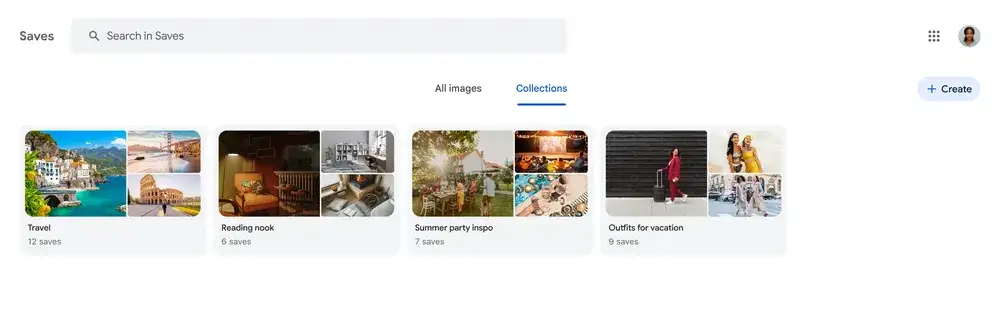
Source: Google
The second change is bigger for our purposes: Google is now generating images directly inside AI Overviews using its latest Nano Banana model. If someone searches for something visual that doesn’t already exist as a photo on the web, Google can now generate one on the spot instead of pulling an existing image from a website. This is rolling out in English across the same regions that already support image creation in AI Mode.
Source: Google
Why This Matters for Image SEO
Neither change is catastrophic, but both point in the same direction: Google is increasingly able to satisfy some visual queries directly within its own interfaces, reducing the need for users to click through in certain situations.
The new gallery keeps people inside Google’s own interface longer, browsing and saving images to collections rather than clicking through. That’s more time spent on Google properties, which historically has correlated with softer referral traffic to publishers, even when your images are the ones being surfaced.
The AI Overviews image generation is the one I’d watch more closely. For certain visual queries, especially ones with a “specific, unique idea” framing, Google can now skip surfacing existing images entirely and generate its own. That doesn’t mean image search traffic disappears, but it does mean the queries where AI generation is the better answer will likely see less demand for real photos from real sites.
None of this is a reason to deprioritize image SEO. If anything, it reinforces the basics that have always mattered and now matter slightly more: strong, descriptive alt text, images embedded in genuinely useful surrounding content, proper image sitemaps, and images that are clearly tied to a real product, place, or use case that generative AI can’t easily fabricate. Queries where authenticity, specificity, or a real-world source matters (an actual product photo, a real location, a documented event) are exactly the queries where an AI-generated image is often a poor substitute, and where your existing images stay valuable.
The Short Version of 25 Years
Google Images launched in 2001, prompted by user demand to see the now-iconic green Versace dress rather than just read about it. Since then, the trajectory has been steady: Similar Images in 2009, Search by Image in 2011, Google Lens in 2018, Multisearch in 2022, Circle to Search in 2024, and the more AI-driven Lens + AI Mode integration and visual “fan-out” search techniques through 2025 and 2026. The pattern across all of it is the same one continuing now: less typing, more showing, and an increasing share of the work happening inside Google’s own interface rather than on the open web.
What I’d Watch Next
For now, I wouldn’t change an image SEO strategy because of these updates. Continue publishing original images, write descriptive alt text, keep image sitemaps updated, and monitor image traffic in Google Search Console over the coming months.
I’ll be keeping an eye on two things over the coming weeks: whether the new Google Images gallery affects referral traffic for image-heavy sites once it fully rolls out, and whether AI-generated images inside AI Overviews start visibly displacing real image results for specific query types. If either shows up clearly in Search Console data, I’ll cover it as a follow-up in this category.
For more on how AI Overviews and AI-driven search features are reshaping optimization priorities, see my earlier post, Google’s New AI Optimization Guide (2026): 10 Things to Do (and 5 to Ignore).