
When building a website, one of the first decisions you need to make is choosing between a single-page vs multi-page website structure.
Both approaches are widely used on the web, but they serve different purposes. Some websites present all content on one long scrolling page, while others organize information across multiple pages such as Home, About, Services, and Blog.
When comparing a single-page vs multi-page website, the most important factors to consider are SEO potential, content structure, and long-term scalability. Understanding the difference between a single page and a multi page website can help you choose the right structure for your business, blog, or portfolio.
| Website Type | Best For |
|---|---|
| Single-Page Website | Landing pages, portfolios |
| Multi-Page Website | Businesses, blogs, ecommerce |
In this guide, we’ll compare single page vs multi page websites, explore their advantages and disadvantages, and explain which structure works best for different types of websites.
If you’re new to the concept, you may also want to first understand what a single-page website is and how it works, which explains the basic structure and benefits of this type of site.
Single-Page vs Multi-Page Website: Quick Answer
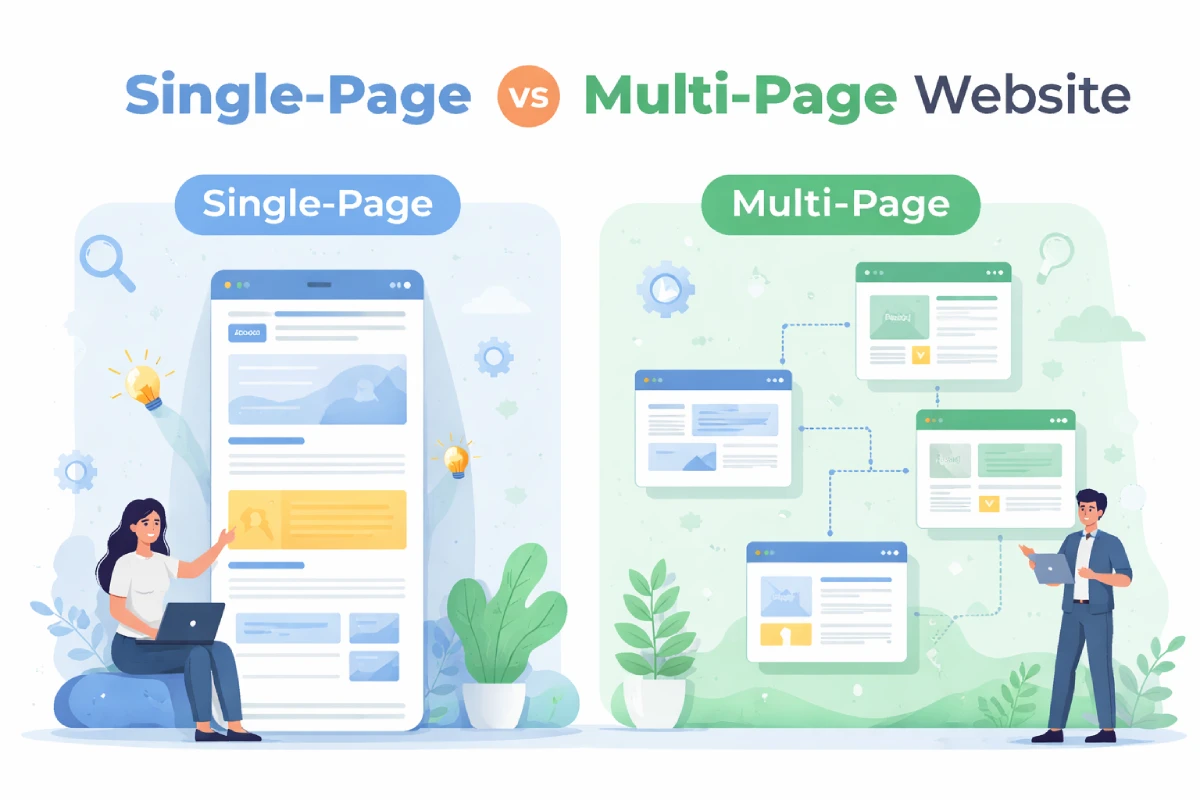
The main difference between a single-page vs multi-page website is how content is organized. A single-page website places all information on one scrolling page, while a multi-page website divides content across separate pages like Home, About, Services, and Blog. Multi-page websites are usually better for SEO and scalability, while single-page websites work well for simple projects or landing pages.
What Is a Single-Page Website?
A single-page website is a website where all the content is placed on one long page instead of being divided into multiple pages.
Visitors navigate through different sections of the site by scrolling or using anchor links in the navigation menu.
Common sections in a single-page website include:
- Hero or introduction section
- About section
- Services or features
- Testimonials
- Contact form
Single-page websites are often used for:
- personal portfolios
- product landing pages
- event promotions
- small business websites
These websites focus on presenting information in a simple and linear flow, which makes them easy to browse on mobile devices.
What Is a Multi-Page Website?
A multi-page website organizes content across several separate pages.
Instead of scrolling through one long page, users navigate through different pages using the main menu.
Typical pages in a multi-page website include:
- Home
- About
- Services
- Blog
- Contact
This structure allows websites to organize large amounts of content more effectively.
Multi-page websites are commonly used for:
- business websites
- blogs and news sites
- ecommerce stores
- corporate websites
Because each page can target a different topic or keyword, multi-page websites often offer more flexibility for content expansion and SEO growth.
Single-Page vs Multi-Page Website: Key Differences
The main difference between a single-page vs multi-page website lies in how content is structured and delivered to users.
| Feature | Single-Page Website | Multi-Page Website |
|---|---|---|
| Structure | One long page with sections | Multiple pages |
| Navigation | Scrolling or anchor links | Menu navigation |
| Content organization | Limited content | Organized across pages |
| SEO targeting | Limited keyword targeting | Multiple keyword opportunities |
| Scalability | Harder to expand | Easier to scale |
| Best for | Small websites or landing pages | Businesses and blogs |
This comparison shows that the choice between a single-page vs multi-page website often depends on the website’s purpose and growth plans.
Advantages of a Single-Page Website
Single-page websites have become popular because they offer a simple and focused user experience.
- Simple navigation: Since all content is on one page, visitors can easily browse the entire website by scrolling.
- Faster user journey: Users don’t need to load multiple pages, which creates a smooth browsing experience.
- Mobile-friendly design: Scrolling is natural on mobile devices, making single-page websites easy to use on smartphones.
- Great for focused messaging: Single-page websites work well for landing pages or small projects where the goal is to guide visitors through a clear story.
Disadvantages of a Single-Page Website
Despite their simplicity, single-page websites also have some limitations.
- Limited content structure: Because everything is placed on one page, it becomes difficult to organize large amounts of content.
- Difficult to scale: As your business grows, you may need additional pages for blog posts, services, or resources.
- SEO limitations: Single-page websites typically target fewer keywords, which can limit their visibility in search engines.
If you want to explore this in detail, read our guide on whether a single-page website is good for SEO, which explains the ranking challenges and optimization strategies.
Advantages of a Multi-Page Website
Multi-page websites are the most common structure on the internet because they allow websites to grow and organize content effectively.
- Better content organization: Different pages allow you to separate topics and make navigation clearer.
- More SEO opportunities: Each page can target different keywords, which improves the chances of ranking in search engines. This is one reason why many businesses choose a multi-page website structure for long-term growth.
- Easier to expand: As your website grows, you can easily add new pages for blog posts, product pages, and service pages.
Disadvantages of a Multi-Page Website
Multi-page websites also have some challenges.
- More development work: Creating multiple pages requires more planning and design effort.
- Complex navigation: If the website has too many pages, navigation must be designed carefully to avoid confusing users.
- Maintenance effort: More pages mean more updates and content management over time.
When Should You Choose a Single-Page Website?
A single-page website works best when the website has a clear and focused purpose.
You may choose this structure if you are building:
- a personal portfolio
- a product landing page
- a small business website
- an event promotion page
In these situations, a single-page website can present information in a simple and engaging format.
When Should You Choose a Multi-Page Website?
A multi-page website is a better choice if your website needs to grow or include large amounts of content.
This structure is ideal for:
- businesses offering multiple services
- blogs publishing regular articles
- ecommerce stores with product categories
- websites targeting many keywords in search engines
If you plan to expand your website over time, a multi-page structure usually offers better scalability and flexibility.
Single-Page vs Multi-Page Website: Which Structure Is Right for You?
Choosing between a single-page vs multi-page website depends on your website goals, content needs, and long-term growth plans.
Single-page websites work well for simple projects and focused messaging, while multi-page websites provide better structure, scalability, and SEO opportunities.
If your website will grow with new pages, articles, or products, a multi-page website is usually the better option. However, for smaller websites or landing pages, a single-page structure can still be effective.
By understanding the difference between a single page and multi page website, you can select the structure that best supports your business and audience.
Frequently Asked Questions
What is the difference between a single page and a multi page website?
The main difference between a single page and a multi page website is how the content is structured. A single-page website places all information on one scrolling page, while a multi-page website organizes content across several pages such as Home, About, Services, and Blog. Multi-page websites make it easier to manage larger amounts of content and scale a website over time.
One page vs multi page website: which is better?
When comparing a one page vs multi page website, the better option depends on the purpose of the website. A one-page website works well for landing pages, portfolios, or small websites with limited content. A multi-page website is usually better for businesses, blogs, and websites that need to grow with more content and SEO opportunities.
Is there a difference between single page vs multi page website SEO?
Yes, there is a difference in single page vs multi page website SEO. Multi-page websites generally have an advantage because each page can target different keywords and topics. A single-page website can still rank in search engines, but it usually has fewer opportunities to optimize for multiple search queries.
Single page website vs multi page website: which website structure is better?
When comparing a single page website vs multi page website, the better structure depends on your website goals. If your site has a clear and focused message, a single-page website may work well. However, if you plan to expand your content, publish blog posts, or target multiple keywords, a multi-page website structure is usually the better choice.
Which website structure is better for SEO?
In most cases, a multi-page website structure is better for SEO because it allows websites to create separate pages for different topics and keywords. This makes it easier for search engines to understand the content and rank it for relevant searches.